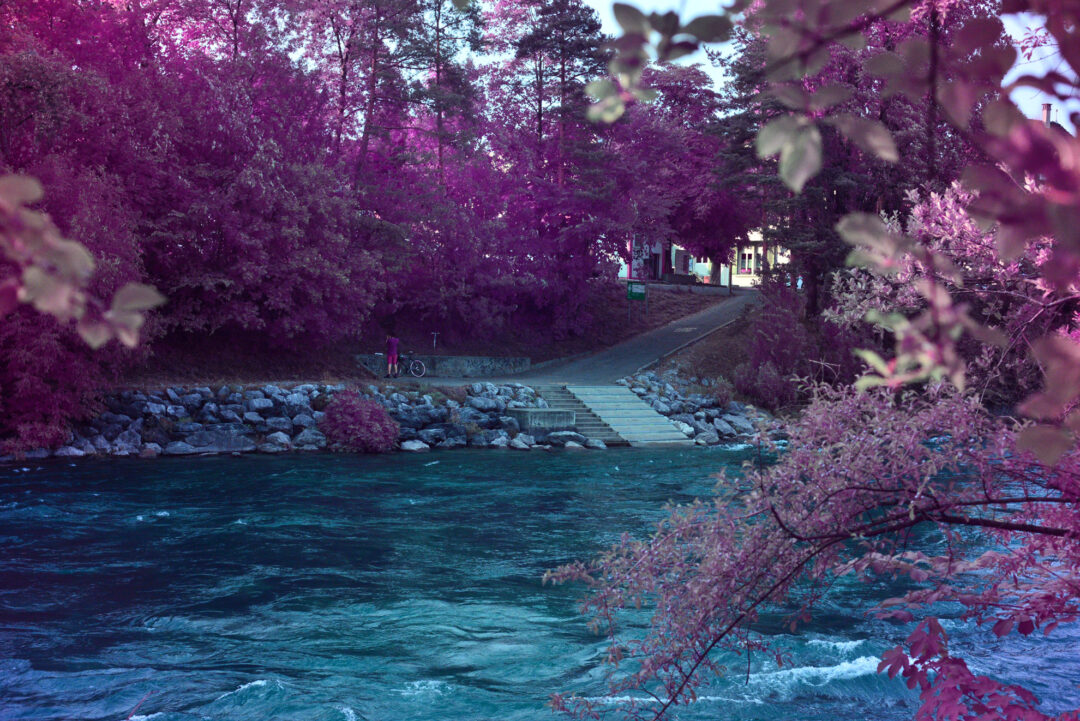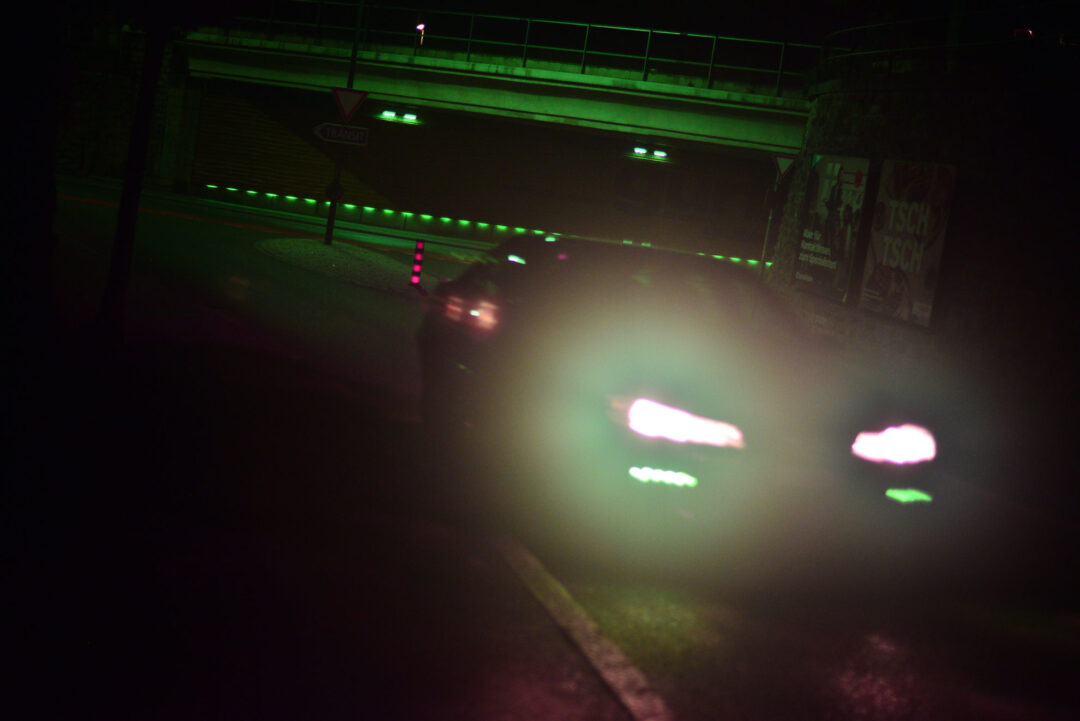

I’ve written before about the strange light artifacts appearing in some of my quad-band images: diffuse light blobs above or beside bright streetlights.
The effect is especially noticeable in scenes containing strong LED light sources at dusk or at night.
At first, I suspected the lens. Older Nikon lenses can certainly produce flare and ghosting when pointed towards bright lights.
However, after some testing, the artifacts remained remarkably consistent and didn’t behave like typical lens reflections.
That eventually led me to suspect the quad-band filter itself.
Quad-band filters are interference filters. They selectively transmit specific wavelength bands while reflecting much of the unwanted light. You can see how much the filter reflects, it’s almost like a mirror:

That’s exactly what makes them useful for multispectral imaging, but it also creates the potential for internal reflections.
The most likely explanation is a reflection between the filter and the camera sensor.
Since I installed the filter directly in front of the sensor, the most likely culprit is the remaining sensor glass that stays in place after removing the hot mirror.
A tempting idea was to remove the remaining sensor glass altogether. However, even a bare sensor is still somewhat reflective. The reflection might become weaker, but it would probably not disappear entirely.
But sensor modification is invasive, risky, and far from guaranteed to solve the problem. In fact, I’ve already destroyed at least two older Nikons trying to remove that glass, which is firmly attached with a very stubborn adhesive.
A more promising approach is introducing a slight tilt to the filter.
The theory is simple: instead of allowing reflected light to bounce straight back onto the sensor, a small tilt redirects the reflection away from the imaging plane.
Because introducing a proper tilt directly in front of the sensor isn’t easy, I removed the internal filter again and returned the camera to full-spectrum. I then switched to a threaded version of the quad-band filter, where experimenting with tilt is much simpler.
Here are the first experiments: the first image was taken without any tilt, the second with a slight tilt applied to the filter.
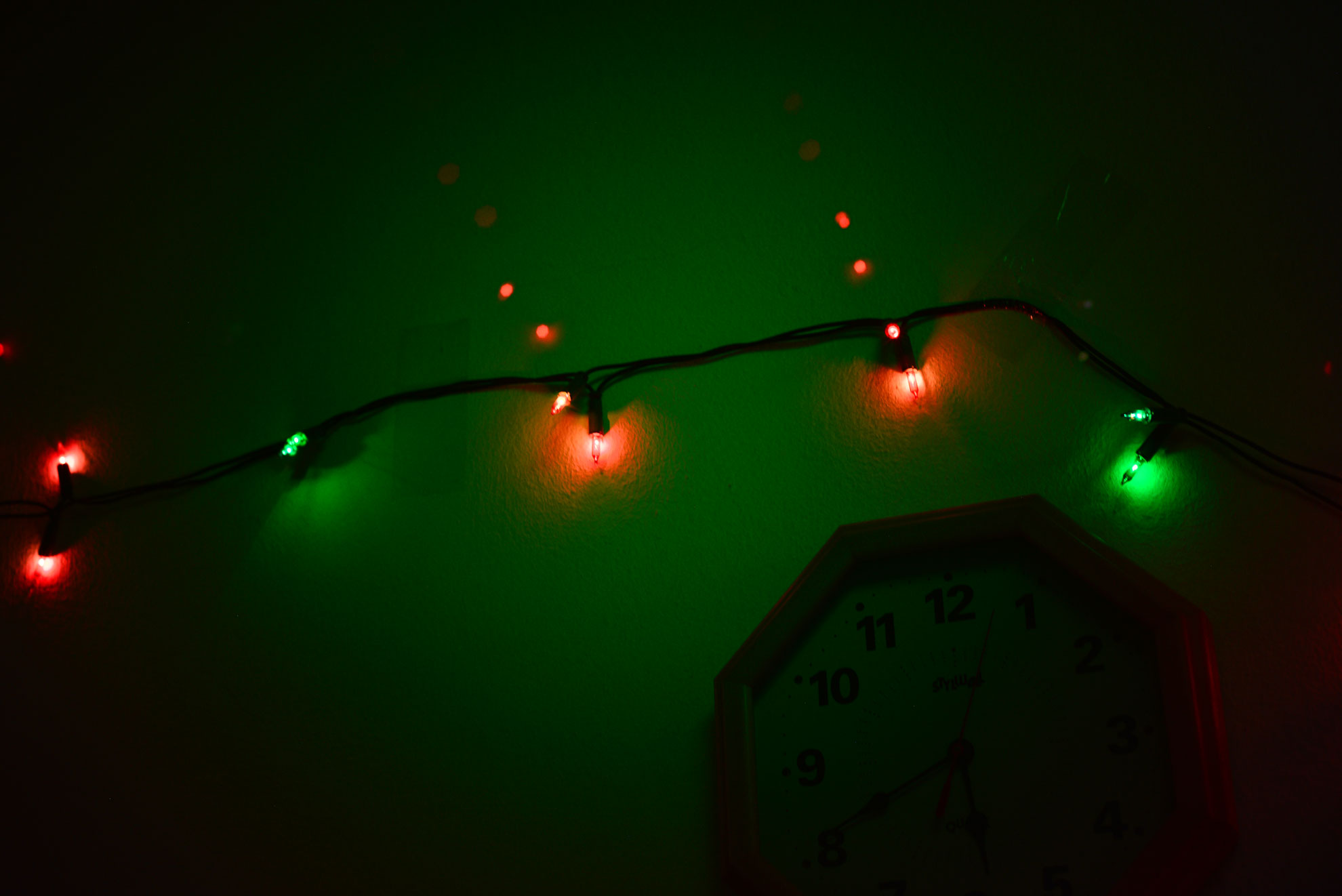

The results are encouraging, but the real test will be in the field.
My concern is that I may get rid of some of the existing artifacts, only to open the door to entirely new ones.