What is Hidden Realms?
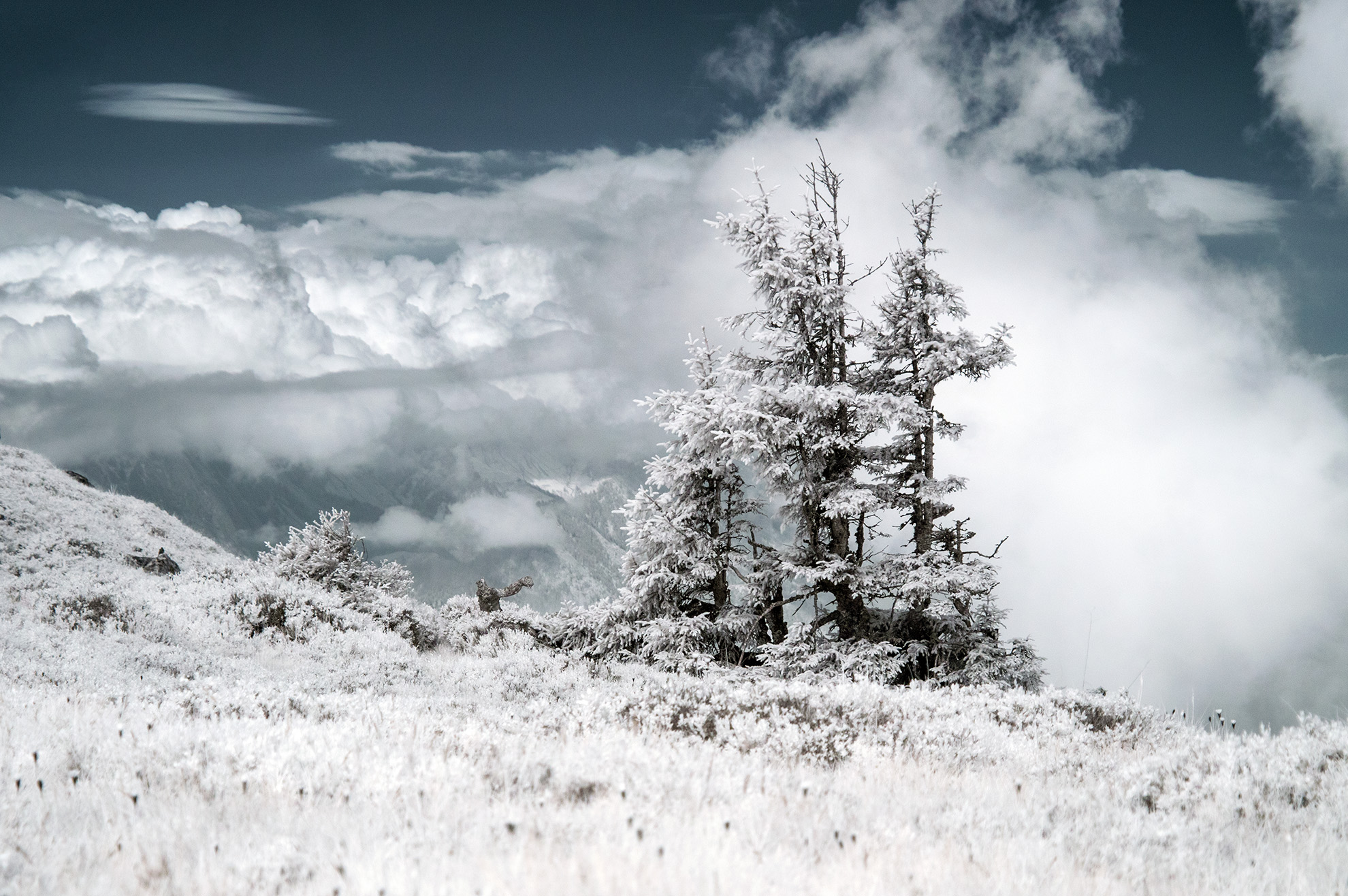
Hidden Realms is a Swiss blog focused on infrared photography and experimental photography. Originally launched as a portfolio, the site gradually evolved into a platform for filter testing, camera conversions, and alternative photography beyond conventional aesthetics. The main focus is on infrared photography, UV photography, and alternative visible-spectrum photography created directly in-camera without post-processing.
Who is behind Hidden Realms?
Hidden Realms is a project by Christoph Kummer. I am based in Thun, in the Bernese Oberland region of Switzerland, and have been photographing since my youth. Over the years, I created hundreds of photographs in the mountains of my region. In the beginning, my work focused heavily on grand landscapes and dark, mystical atmospheres. Today, my approach is more experimental. In addition to nature, I’m increasingly drawn to urban subjects, unconventional filter techniques, and visible-spectrum photography. The creative process itself has become more important to me.

Why are you fascinated by infrared photography?
I’m fascinated by surreal and dreamlike imagery. I’ve always had a strong connection to fantasy and science fiction. Infrared photography reveals a reality the human eye cannot see. A lot of modern imagery feels interchangeable today — the same color palettes, identical editing styles, and similar compositions everywhere. Infrared photography feels like the opposite of that to me. What makes it special is that the effect is created physically inside the camera itself. It’s not a Photoshop effect or a LUT. The camera captures wavelengths of light that would otherwise remain invisible to us.
Did you start with analog or digital photography?
I’m definitely a child of the digital era. My first camera was a Nikon D40x, and my first infrared camera was a Nikon D70. Analog infrared photography does interest me, but films like Aerochrome or Kodak HIE are now very rare or prohibitively expensive. Digital systems deliver outstanding results.
How does infrared photography work technically?
The internal hot mirror filter is first removed. This filter blocks UV and infrared light. Once removed, the camera becomes what’s known as a full-spectrum camera. Specialized filters are then used to either block or transmit specific wavelengths of light. A classic 720nm filter blocks almost all visible light and is considered the standard for digital infrared photography. For more creative looks, I use custom filter combinations. These intentionally mix visible light with infrared wavelengths to create unique color palettes directly in-camera.
What is the Aerochrome look?
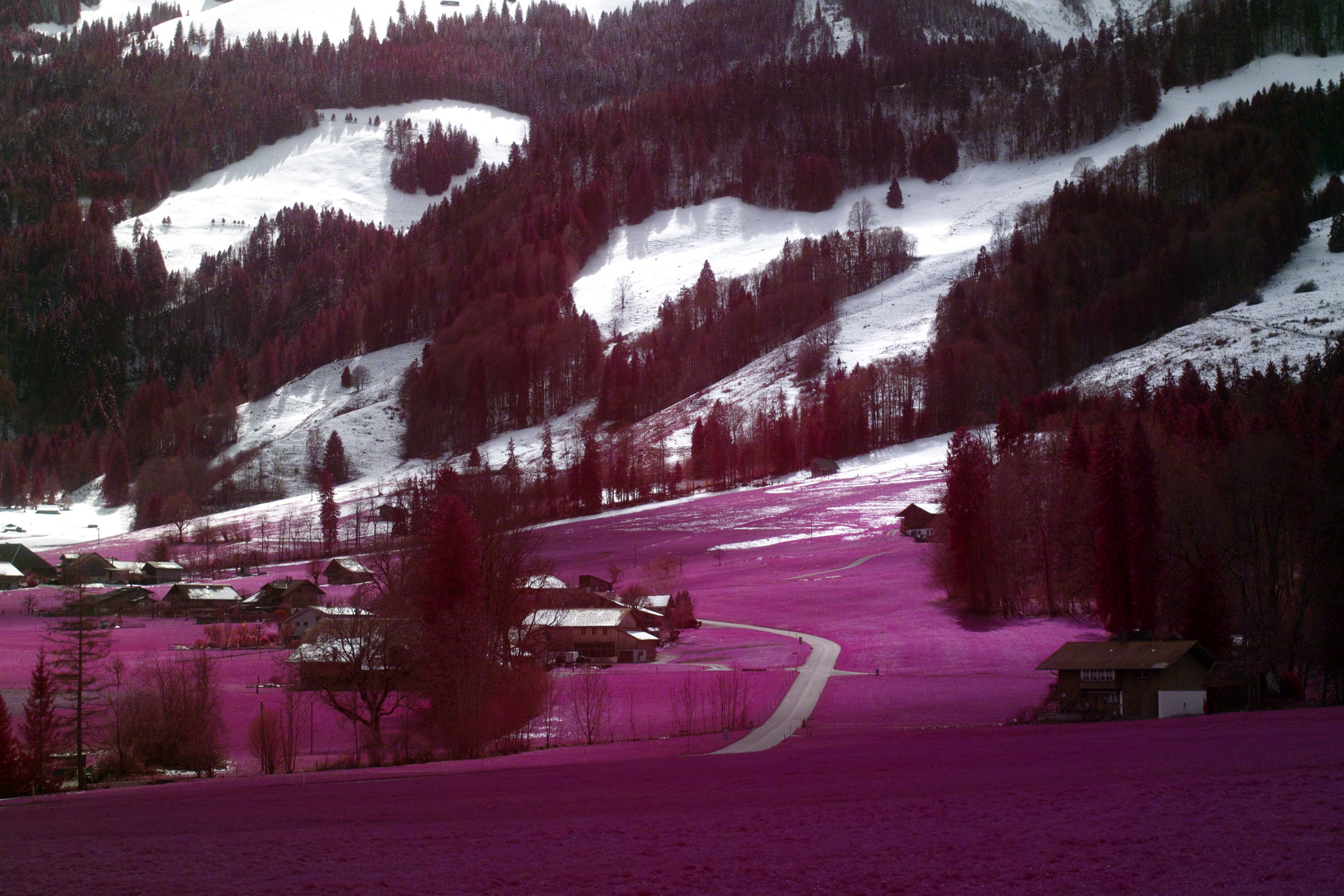
The Aerochrome look is based on the legendary Kodak Aerochrome film, which rendered vegetation in vivid red and pink tones. Today, this style can be recreated digitally. Sigma Foveon cameras combined with specialized triple-bandpass filters are especially interesting because they can produce an authentic Aerochrome look directly in-camera, including all the typical color shifts. The effect also works with CMOS and CCD sensors, although differently. The key factor is balancing green, red, and infrared light.
What is Rich False Color IR?
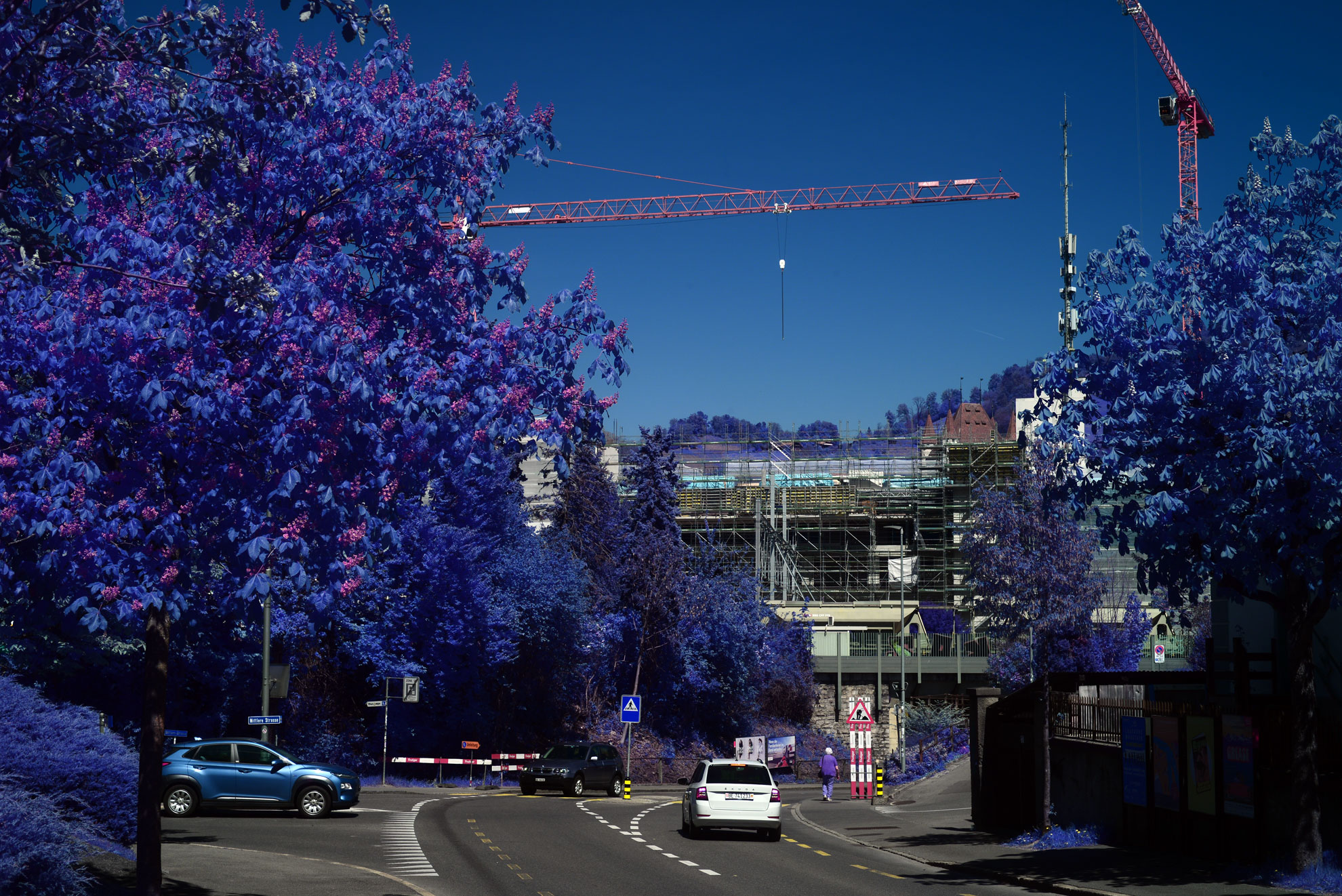
Rich False Color IR emerged from the desire for greater color diversity in infrared photography. Many traditional IR conversions produce fairly monotonous color palettes. This filter selectively allows visible light and certain infrared wavelengths to pass through. The result is more nuanced color rendering directly in-camera. One variation is the Blue Trees look, where vegetation appears blue while other areas remain relatively natural. I developed and refined this technique over many years.
What is the Black Trees look?
The idea of black trees fascinated me for a long time. It took years before I found a technical way to achieve it. The effect uses a specialized astrophotography filter. It works without infrared light, but includes minimal UV wavelengths. This creates dark plants and a distinctive atmosphere.
Why don’t you reveal all your filter and conversion “recipes”?
I already share a great deal of information on the blog about filters, camera conversions, and technical processes. That said, I intentionally keep some of my more specialized filter combinations private. These looks are the result of years of experimentation and experience. Not everything needs to be fully disclosed immediately. I also find today’s culture of instant gratification and constant content production exhausting. That’s one reason why I’ve intentionally distanced myself from much of social media. Long-term creative development interests me far more than trends, reach, or short-lived attention.
Do you sell converted cameras?
Yes, I modify the cameras myself and resell many of them. The easiest way is to contact me directly. Occasionally, individual models are also listed on eBay. Write me at criskummer@hotmail.com.
Can you be hired for projects?
Yes, generally speaking. Project inquiries can be sent directly via email. However, I only work on projects that fit my style and genuinely interest me.
—
Was ist Hidden Realms?
Hidden Realms ist ein Schweizer Blog über Infrarotfotografie und experimentelle Fotografie. Ursprünglich als Portfolio gestartet, entwickelte sich die Seite zu einer Plattform für Filtertests, Kameraumbauten und alternative Fotografie abseits klassischer Looks. Im Mittelpunkt stehen Infrarotfotografie, UV-Fotografie und alternative Fotografie im sichtbaren Spektrum, die ohne Nachbearbeitung entstehen.
Wer steckt hinter Hidden Realms?
Hidden Realms ist ein Projekt von mir, Christoph Kummer. Ich lebe in Thun im Berner Oberland in der Schweiz und fotografiere seit meiner Jugend. Über Jahre entstanden hunderte Fotos in den Bergen meiner Region. Früher lag der Fokus stark auf opulenten Landschaften und mystisch-düsteren Stimmungen. Heute arbeite ich experimenteller. Neben Natur interessieren mich zunehmend urbane Motive, ungewöhnliche Filtertechniken und das sichtbare Spektrum. Der kreative Prozess ist für mich wichtiger geworden.
Warum fasziniert dich Infrarotfotografie?
Mich faszinieren surreale und traumhafte Bildwelten. Ich habe seit jeher eine starke Verbindung zu Fantasy und Science Fiction. Infrarotfotografie eröffnet eine Realität, die das menschliche Auge nicht sehen kann. Viele moderne Bilder wirken heute austauschbar. Immer gleiche Farbpaletten, identische Bearbeitungen und ähnliche Kompositionen. Infrarot ist für mich ein Gegenpol dazu. Das Besondere daran ist, dass der Effekt direkt physikalisch in der Kamera entsteht. Es handelt sich nicht um einen Photoshop Effekt oder einen LUT. Die Kamera nimmt Licht wahr, das für uns sonst unsichtbar bleibt.
Hast du mit analoger oder digitaler Fotografie begonnen?
Ich bin klar ein Kind der digitalen Ära. Meine erste Kamera war eine Nikon D40x, meine erste Infrarotkamera eine Nikon D70. Analoge Infrarotfotografie interessiert mich zwar, aber Filme wie Aerochrome oder Kodak HIE sind heute kaum noch erhältlich oder sehr teuer geworden. Digitale Systeme liefern hervorragende Resultate.
Wie funktioniert Infrarotfotografie technisch?
Bei einer Kamera wird zuerst der interne Sperrfilter entfernt, der UV- und IR-Licht blockiert. Dadurch entsteht eine sogenannte Full Spectrum Kamera. Danach werden spezielle Filter eingesetzt, welche bestimmte Wellenlängen durchlassen oder blockieren. Ein klassischer 720 nm Filter blockiert fast das gesamte sichtbare Licht und gilt als Standard in der digitalen Infrarotfotografie. Für kreative Looks verwende ich eigene Filterkombinationen. Dabei wird sichtbares Licht gezielt mit Infrarot kombiniert, um spezielle Farbwelten direkt in der Kamera zu erzeugen.
Was ist der Aerochrome Look?
Der Aerochrome Look basiert auf dem legendären Kodak Aerochrome Film. Dieser stellte Vegetation in kräftigen Rot- oder Pinktönen dar. Heute lässt sich dieser Stil digital präzise nachbilden. Besonders spannend sind Sigma Foveon Kameras mit speziellen Triple-Bandpass-Filtern. Damit lässt sich ein sehr authentischer Aerochrome Look direkt in der Kamera erzeugen, inklusive natürlicher Farbverschiebungen. Auch mit CMOS- oder CCD-Sensoren funktioniert das, allerdings etwas anders. Entscheidend ist die Balance zwischen Grün-, Rot- und Infrarotlicht.
Was ist Rich False Color IR?
Rich False Color IR entstand aus dem Wunsch nach mehr farblicher Vielfalt in der Infrarotfotografie. Viele klassische IR-Umbauten erzeugen monotone Farbpaletten. Dieser Filter lässt gezielt sichtbares Licht und bestimmte Infrarotbereiche durch. Dadurch entstehen differenzierte Farbwelten direkt in der Kamera. Ein Look daraus ist Blue Trees. Dabei wird die Vegetation blau, während andere Bildbereiche relativ natürlich bleiben. Diese Technik entwickelte und verfeinerte ich über Jahre hinweg.
Was ist der Black Trees Look?
Die Idee schwarzer Bäume faszinierte mich schon lange. Erst später fand ich einen technischen Weg, dies umzusetzen. Dabei wird ein spezieller Astrofotografie Filter verwendet. Der Effekt arbeitet ohne Infrarotlicht, enthält aber minimale UV-Anteile. Dadurch entstehen schwarze Pflanzen und eine sehr eigene Bildstimmung.
Warum verrätst du nicht alle “Rezepte” für deine Filter und Umbauten?
Im Blog teile ich bereits viele Informationen über Technik, Filter und Kameraumbauten. Einige spezielle Filterkombinationen, die ich in meine Kameras einbaue, behalte ich bewusst für mich. Hinter diesen Looks stecken Jahre an Experimenten und Erfahrung. Nicht alles muss sofort komplett offengelegt werden. Die heutige Kultur von Instant Gratification und permanenter Content-Produktion empfinde ich als ermüdend. Genau deshalb meide ich einen grossen Teil von Social Media bewusst. Mich interessiert langfristige kreative Entwicklung mehr als schnelle Trends, Reichweite oder kurzlebige Aufmerksamkeit.
Verkaufst du umgebaute Kameras?
Ja, ich rüste die Kameras selbst um und verkaufe viele davon weiter. Am einfachsten ist eine direkte Anfrage. Teilweise erscheinen einzelne Modelle auch auf eBay. Schreib mir an criskummer@hotmail.com.
Kann man dich für Projekte buchen?
Ja, grundsätzlich schon. Anfragen können direkt per Mail gesendet werden. Ich arbeite allerdings nur an Projekten, die stilistisch zu mir passen und mich interessieren.