
The filter tilt approach actually works. The setup is nothing sophisticated—I simply hold the filter in front of the lens with a small gap at the bottom, roughly the thickness of a credit card.
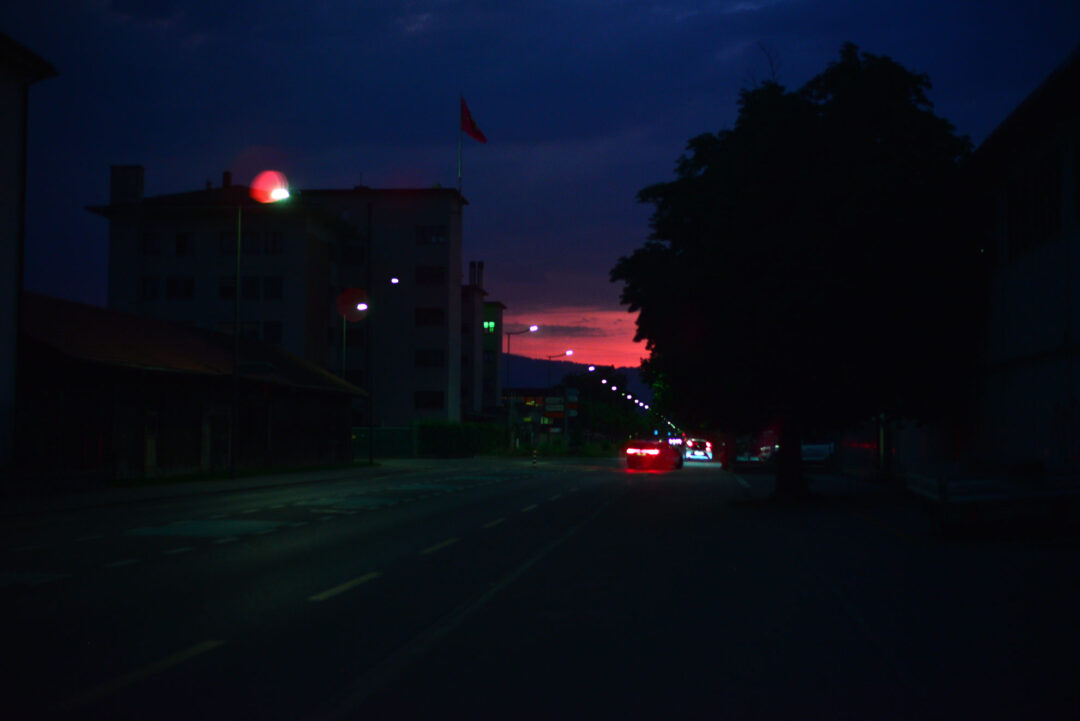
That tiny angle is enough to change the reflection geometry, and the results are immediately visible. The largest light blobs around bright streetlights are greatly reduced or disappear altogether.
At this point, I suspect there may not be a better solution. The reflections are most likely caused by an interaction between the quad-band filter and the camera’s sensor glass. By slightly tilting the filter, the reflected light no longer bounces straight back onto the sensor, effectively breaking the optical path that creates the ghosting.
I also experimented with a different setup by removing the hot mirror and using a GRB1 filter instead, allowing a small amount of infrared light to reach the sensor. The effect is quite interesting.
Certain streetlights—especially the deep-orange sodium-vapor lamps, or at least what I believe are sodium-vapor lamps—appear to emit a significant amount of infrared radiation. Allowing some of that infrared light into the image produces some fascinating effects.
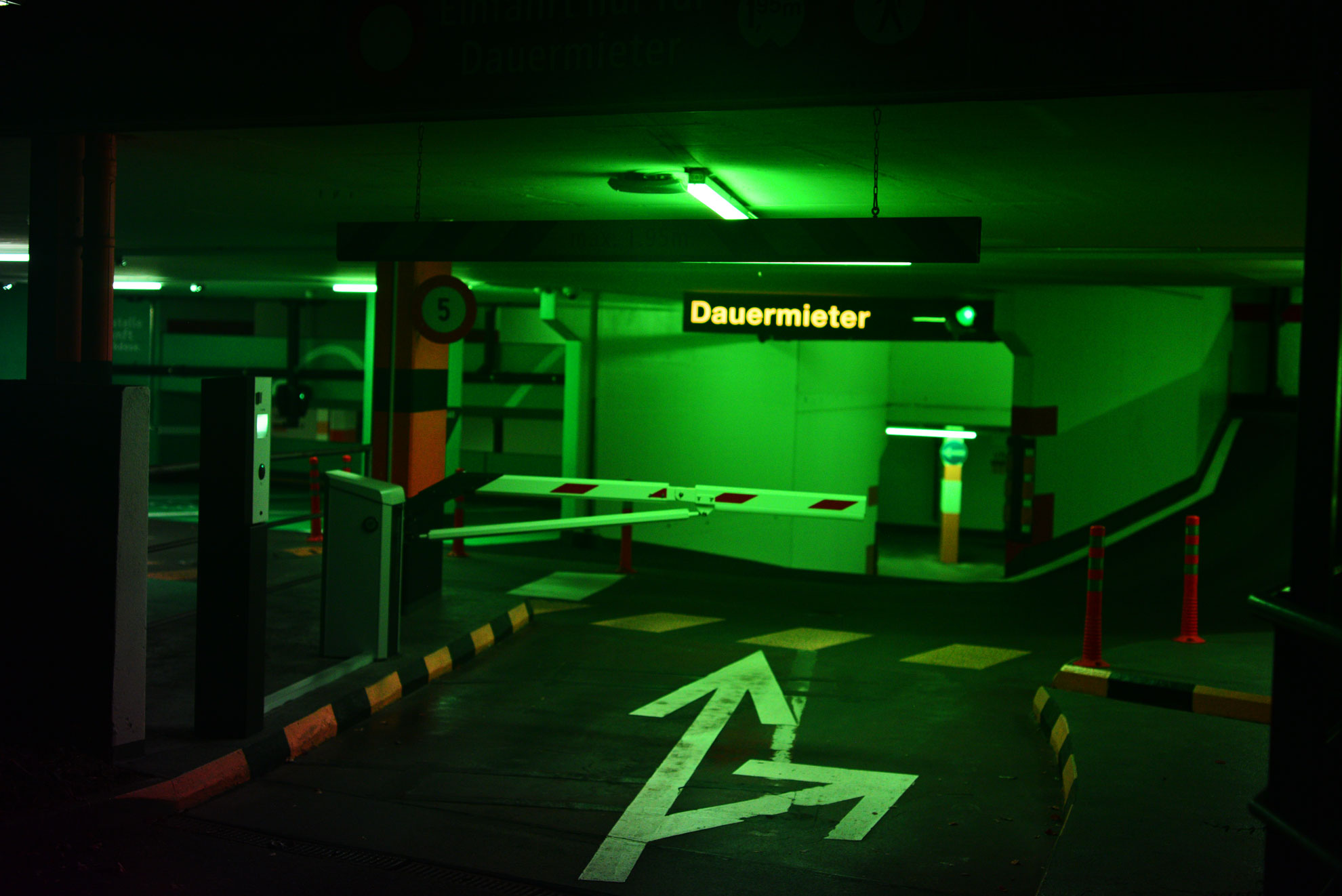
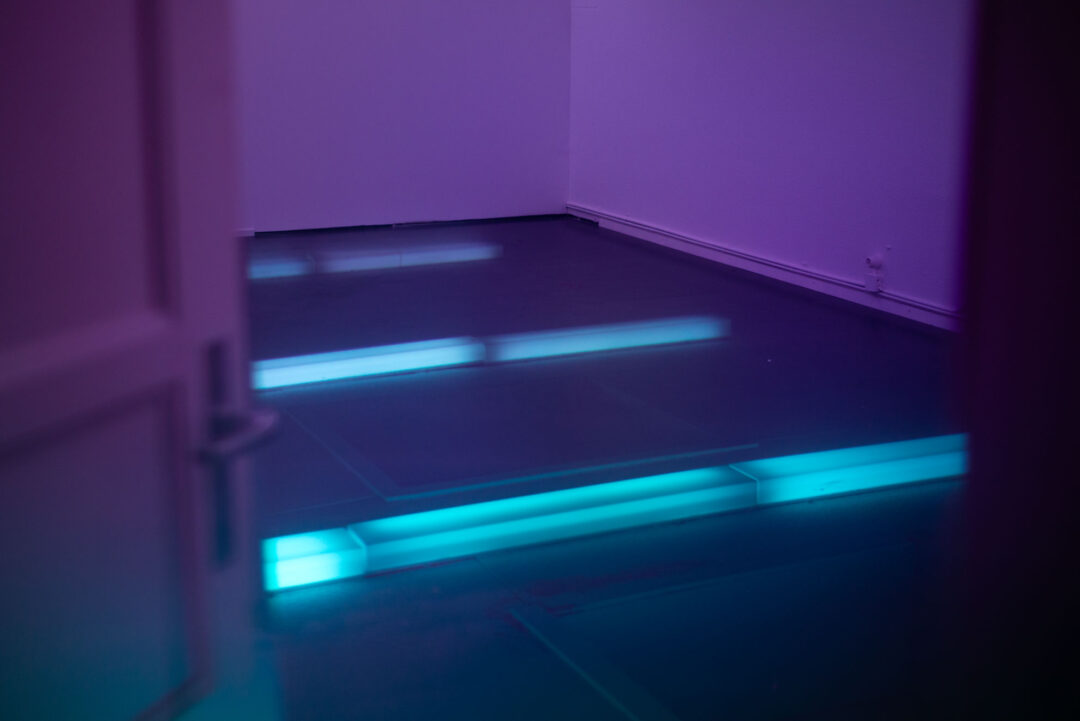
Here are a few example images from these tests, most of them taken with the GRB1 filter.